Application Design Narrative
Mission Control
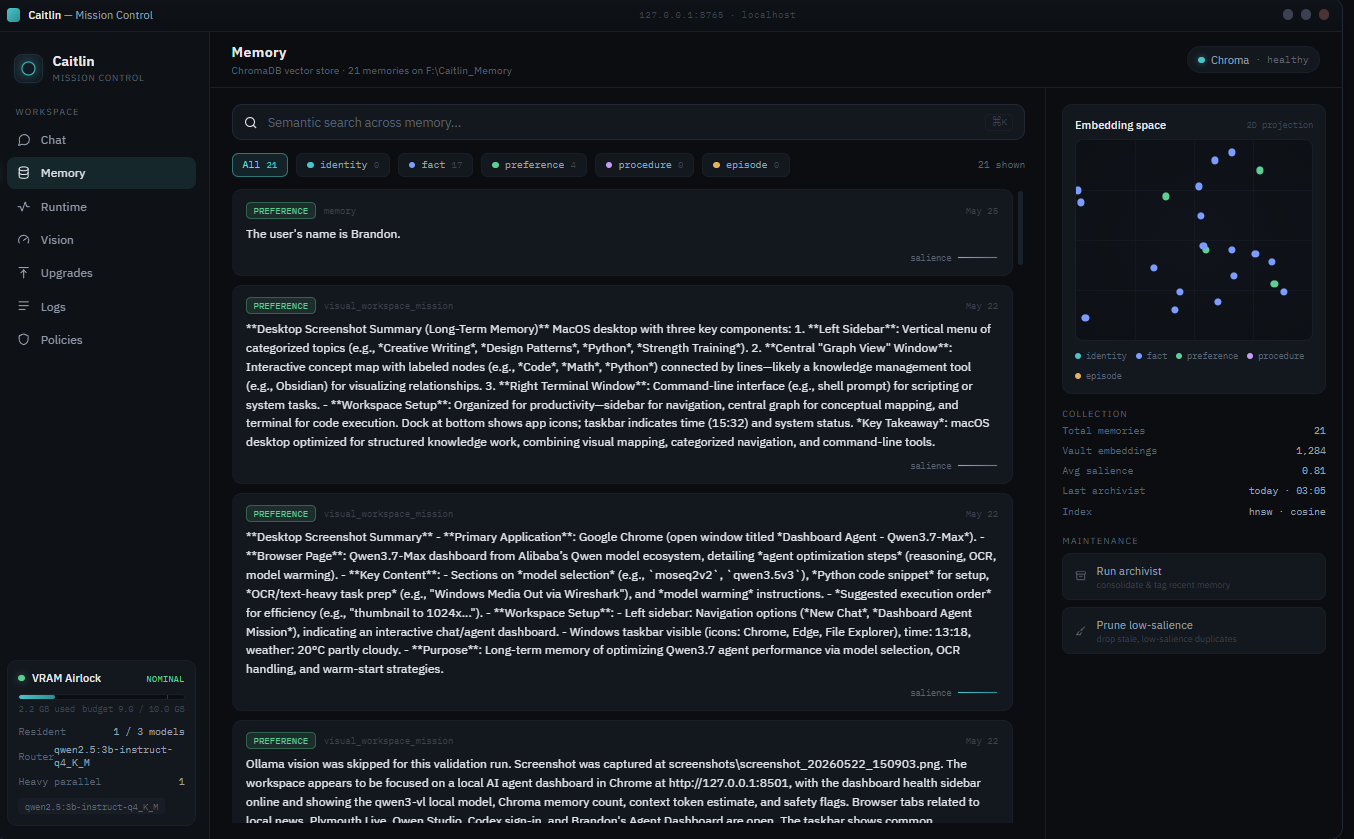
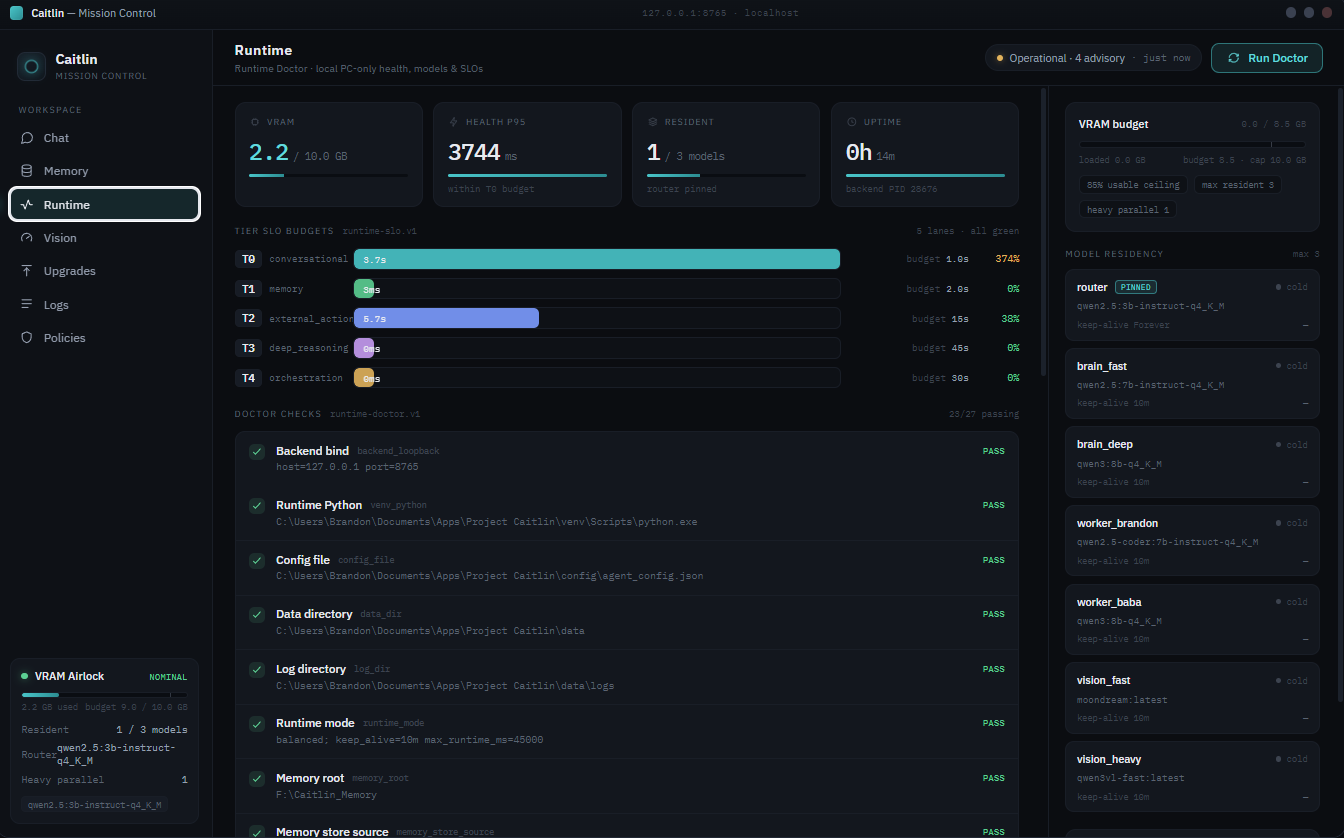
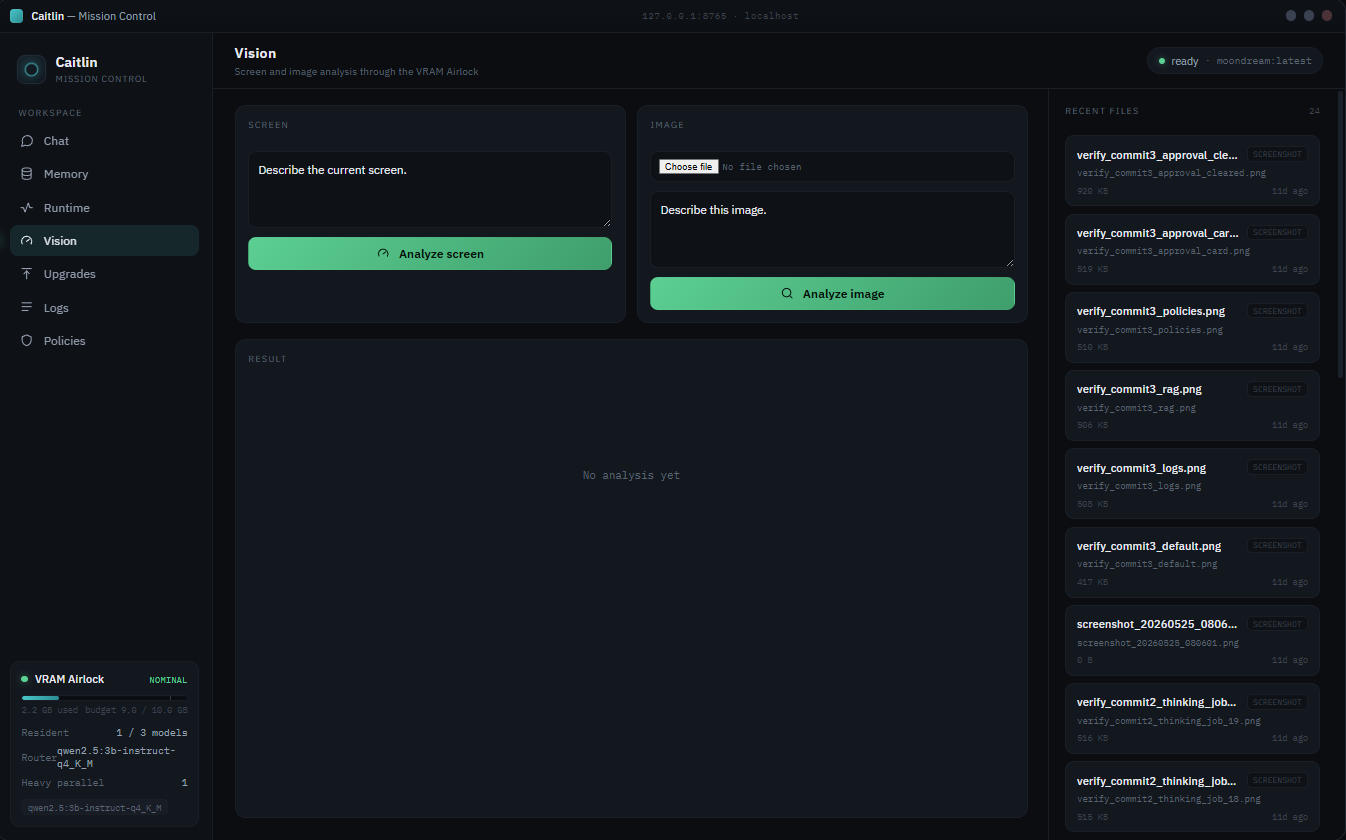
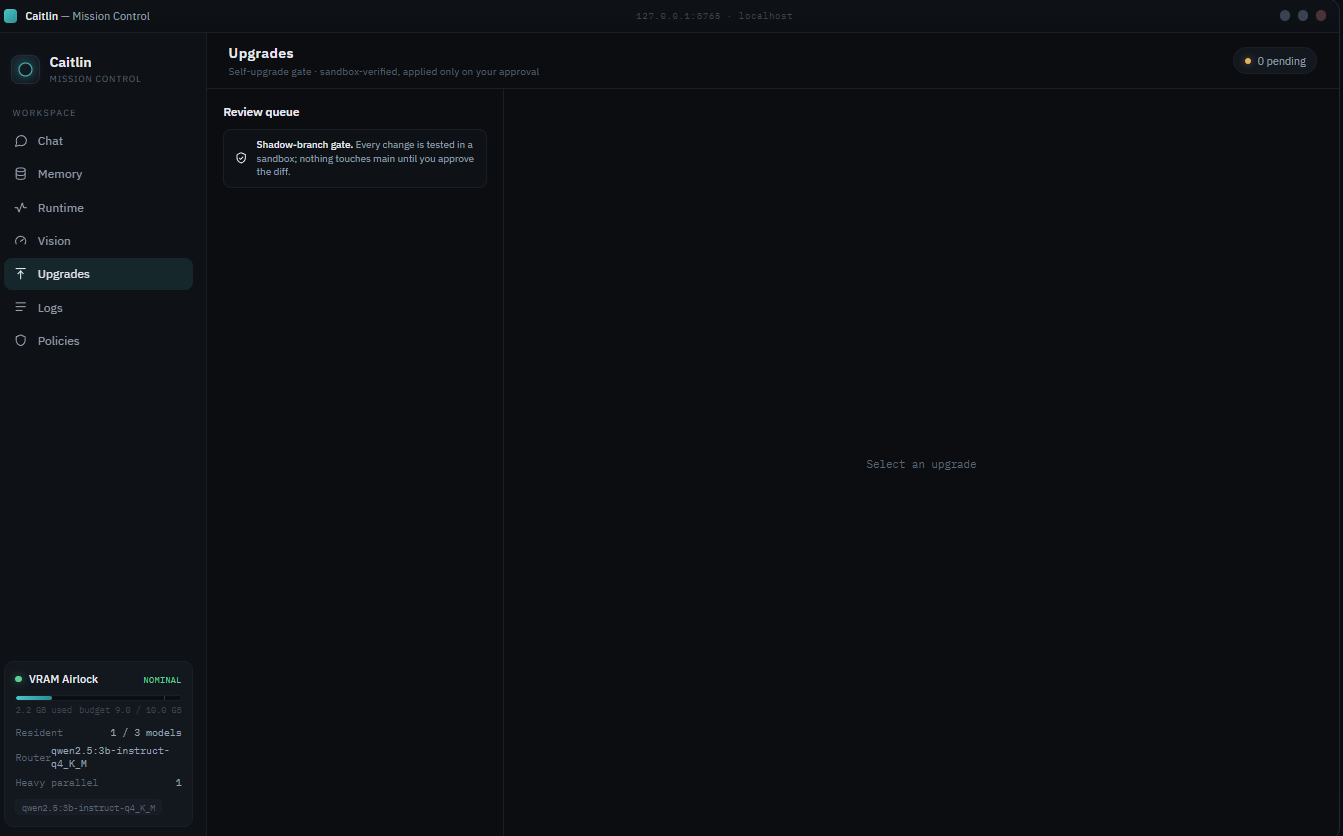
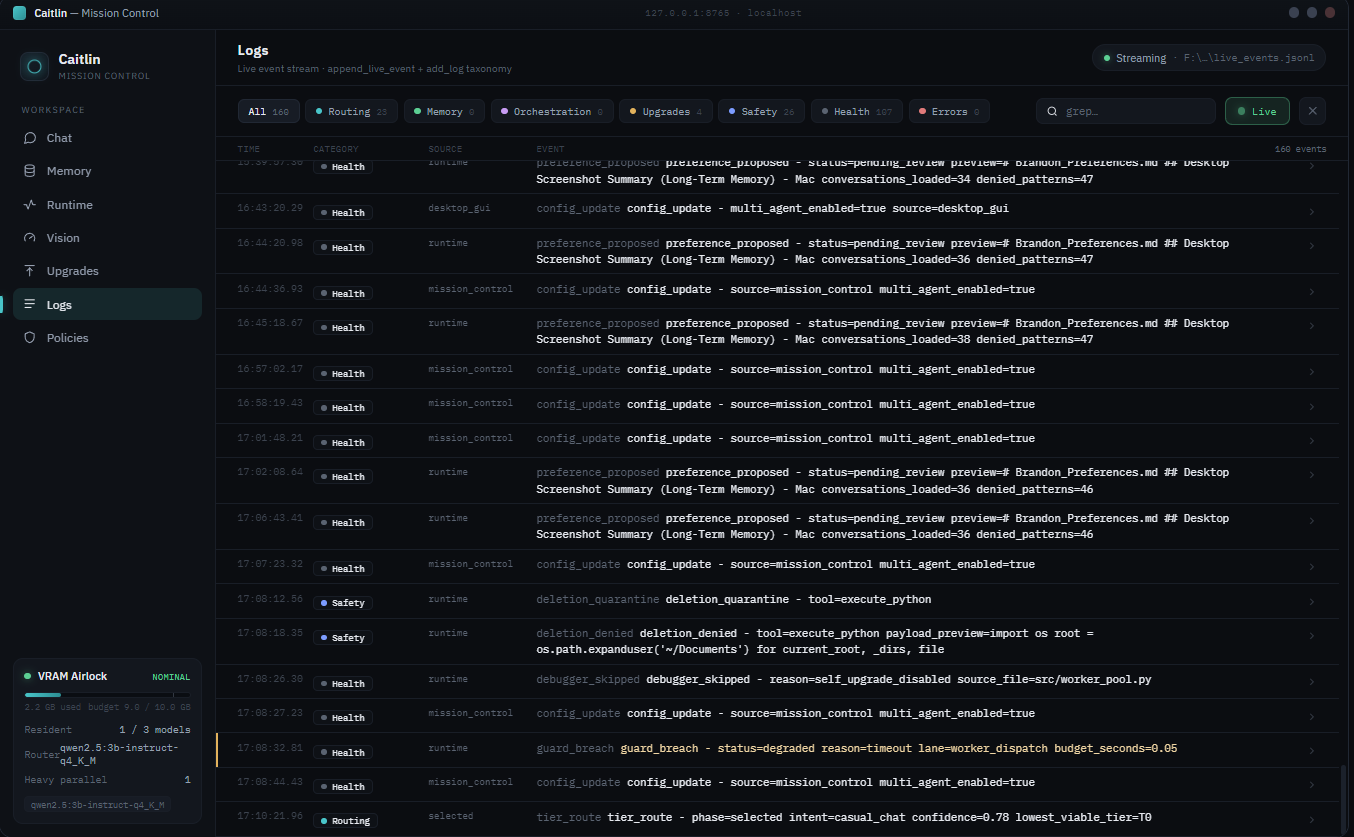
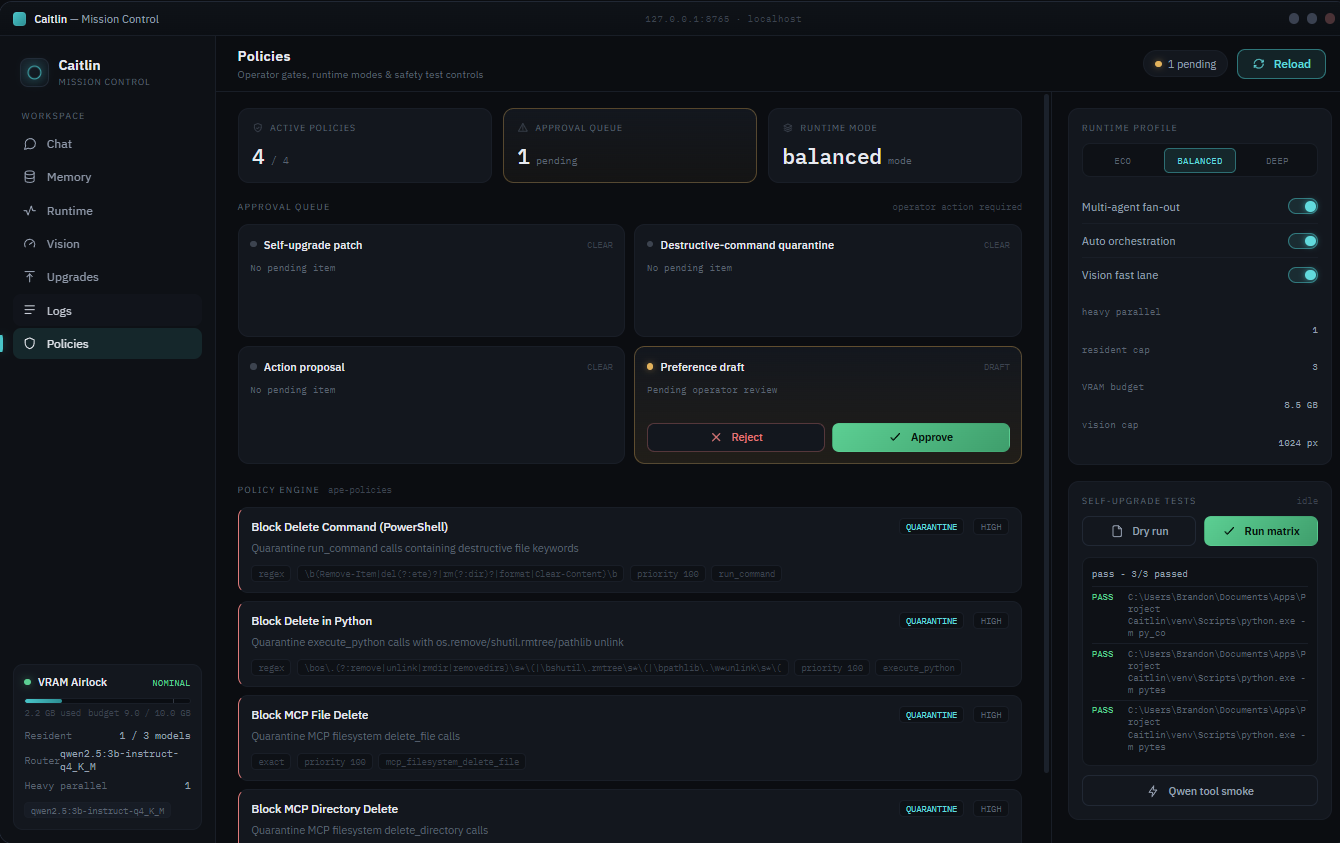
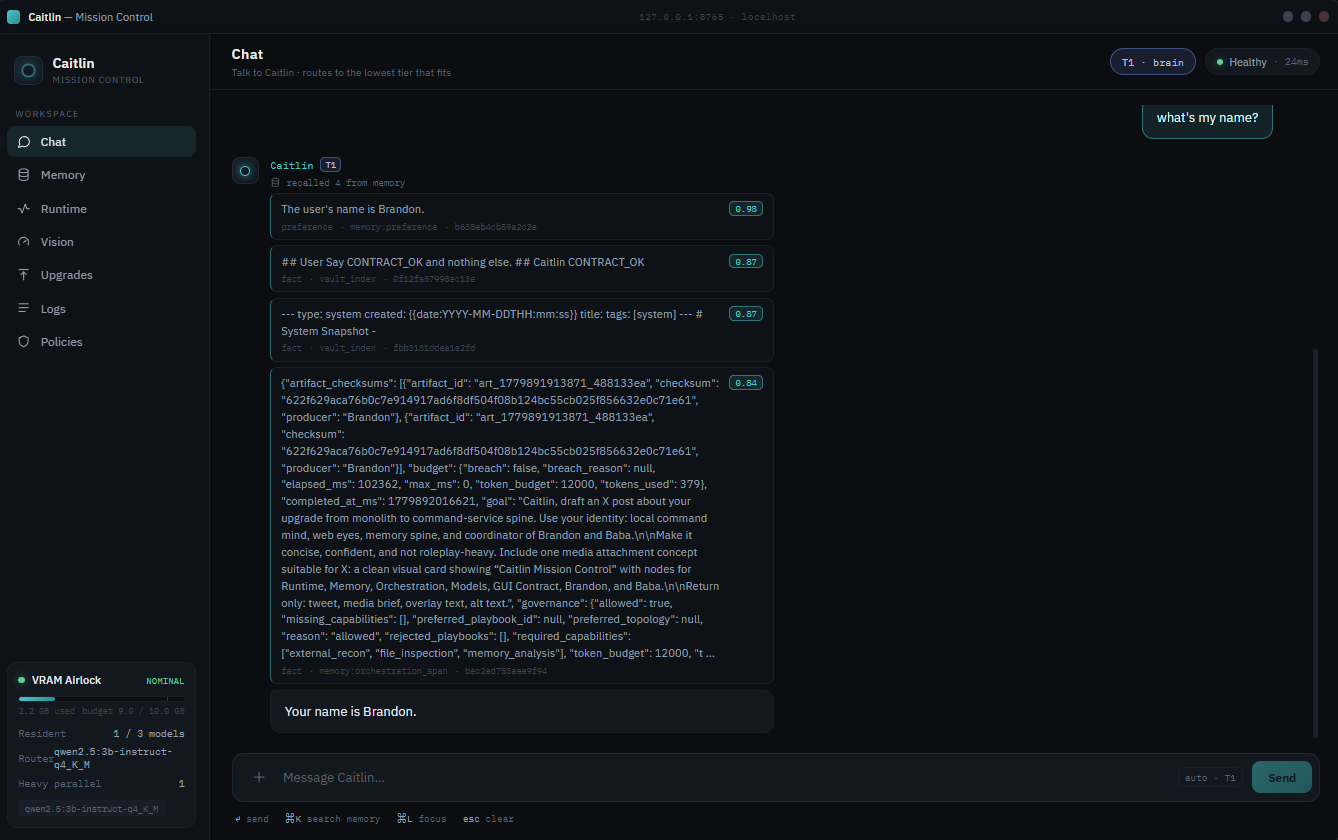
The Mission Control GUI surfaces every layer of Caitlin in one terminal-style interface: chat with streaming tool calls, memory, runtime health, vision, self-upgrades, log taxonomy and sovereignty policies.
Challenge
Build a local-first command mind that can reason, see, remember and self-improve on a single workstation without leaking sensitive context out to the cloud, while staying governed by explicit sovereignty rules.
Product Strategy
A ThreadingHTTPServer backend on 127.0.0.1:8765 routes intent through tiered model profiles (router, brain_fast, brain_deep) with Caitlin as the command mind coordinating Brandon (code worker) and Baba (analysis worker). The CustomTkinter Mission Control surfaces every layer, Chat, Memory, Runtime, Vision, Upgrades, Logs and Policies, behind a calm terminal-style design.
Capabilities
Product Surfaces
- Mission Control GUI (CustomTkinter)
- Chat, Memory, Runtime, Vision tabs
- Upgrades, Logs, Policies tabs
- ChromaDB vector store with RAG
- Local Ollama model orchestration
Outcome / Intended Impact
A working hybrid cognitive engine: ChromaDB vector memory with RAG and archivist pruning, local vision through moondream2 and qwen3vl-fast, a sandbox-gated self-upgrade pipeline with pytest matrix and approval workflow, and YAML-based sovereignty policies constraining autonomous behaviour, all observable through one local Mission Control GUI.
A local, Windows-first AI command system. A hybrid cognitive engine pairing a local RTX 3080 for vision and fallback with high-context API models for reasoning, run entirely on localhost through a CustomTkinter Mission Control GUI, a Streamlit dashboard and a ChromaDB-backed vector memory powered by Ollama.
Built to make a workstation think, see, and remember on its own.
KREO local AI system case study