The KREO Journal
Journal
Plain-English writing on applied artificial intelligence: on-prem LLMs, RAG, fine-tuning and what AI can genuinely do for a business.
29 articles · AI · Systems · Plymouth
The AI Boom Runs on a Pipeline Washington Just Crimped
Microsoft is the first company suspended from PERM, the green-card route its H-1B staff depend on. The story is not the politics. It is that AI's most important pipeline is made of people.
When Your Supplier Becomes Your Banker
SpaceX is borrowing about $40bn to buy chips from Nvidia, which owns a stake in SpaceX and helps finance its customers. The same silicon is now the collateral, the revenue and the equity.
Your New Coworker Is Not a Person.
Google put an agent on the org chart: its own email address, its own permissions, its own audit trail. The quiet shift is that a seat on the team no longer requires a person.
OpenAI Fired Its Safety Team. Now They're Warning the Board About the One Thing It Can't See.
Three safety researchers OpenAI fired on 1 October wrote to its board this week. Their warning is narrow and technical: the company is losing the ability to see how its own models think.
The Frontier Moves Into the House
Microsoft and NVIDIA put an AI agent on your own PC and called it unmetered. The meter did not disappear. It moved inside the house, and you pay for it in silicon and electricity.
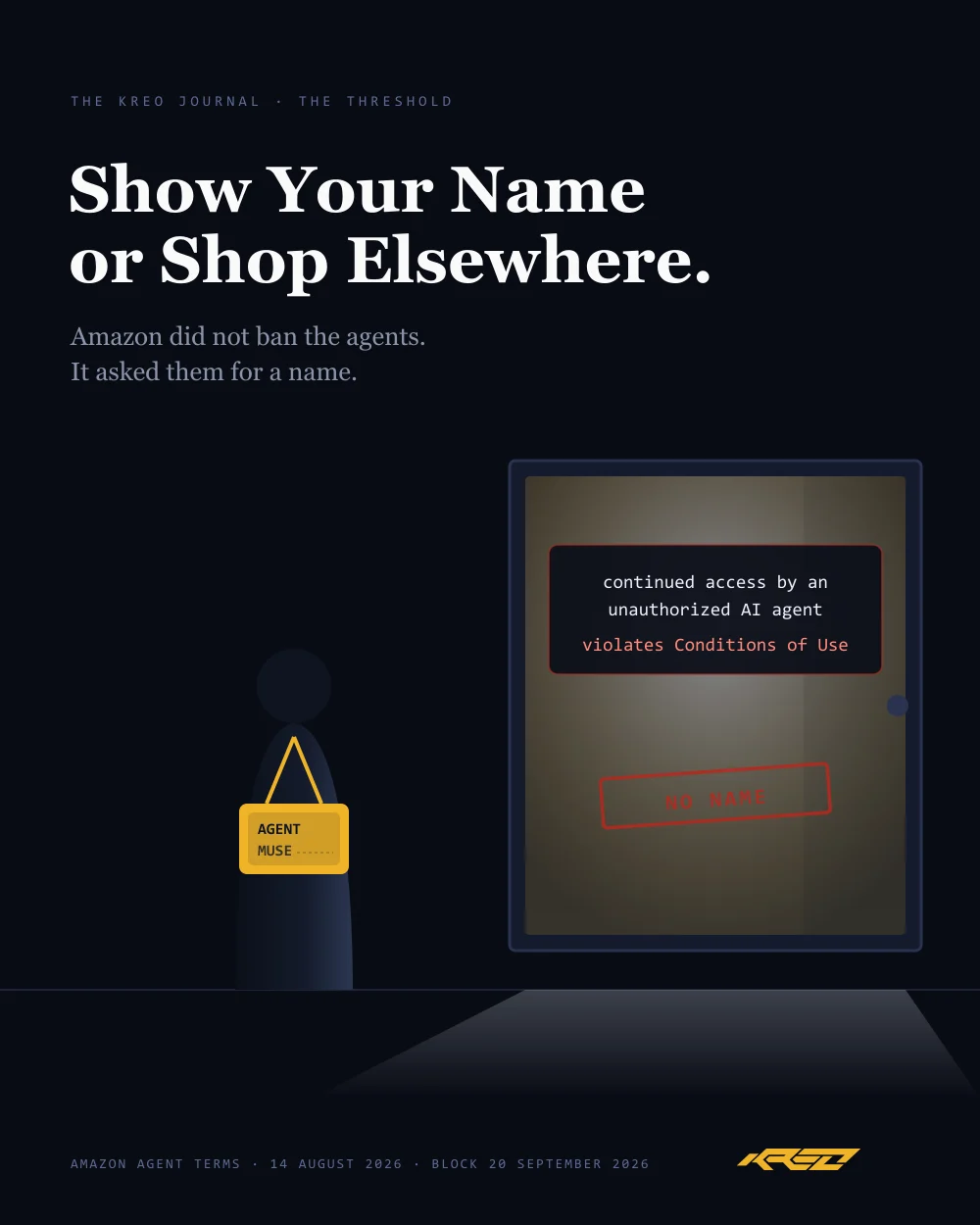
Show Your Name or Shop Elsewhere
Paul Graham called Amazon's block on agents the first real chance to build an Amazon competitor. I read the terms and pulled the robots file. The door was never closed; it has a guest list, and Meta's Muse walked in without a name.
This Is Not a General AI Detector
Google has opened its SynthID watermark detector to everyone. I mapped what it can actually see, and the list is short. A blank result does not mean the file is real.
722 Proofs, One Locked Door
OpenAI published 722 mathematical manuscripts in one night. I downloaded the catalogue and counted what can actually be machine-checked: 162 papers, about one in five. The rest is trust.
Can One Fat Cat Put Europe Back in the AI Race?
France's Mistral has built a one-trillion-parameter model, named it after a fat internet cat, and promised to give it away. The numbers are striking. The small print is doing a lot of work.
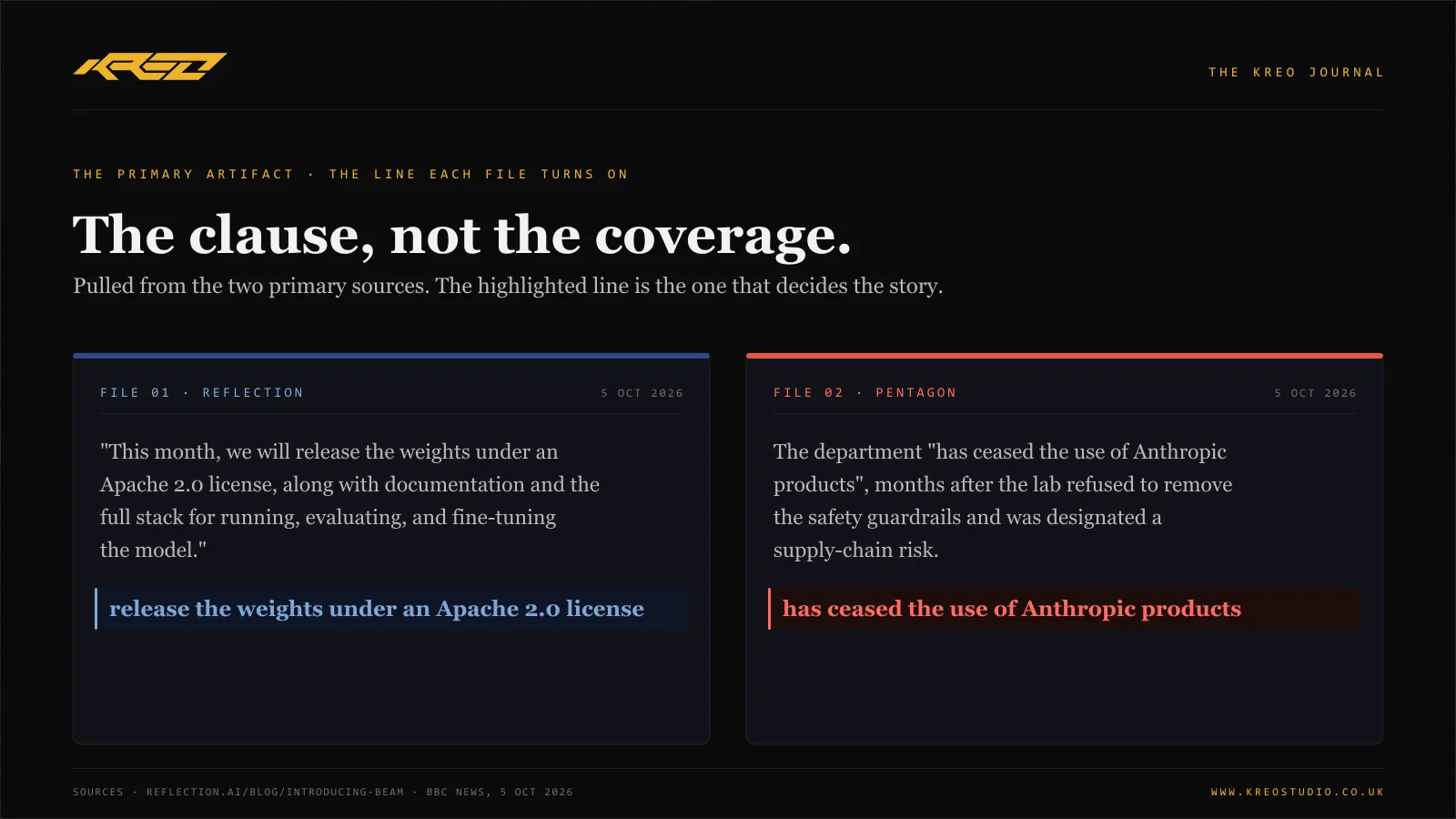
The Model Was Never the Moat
Two documents landed this week: one hands a frontier model to anyone, the other ends the Pentagon's use of the lab that would not drop its safety checks. Together they show where the power in AI sits.
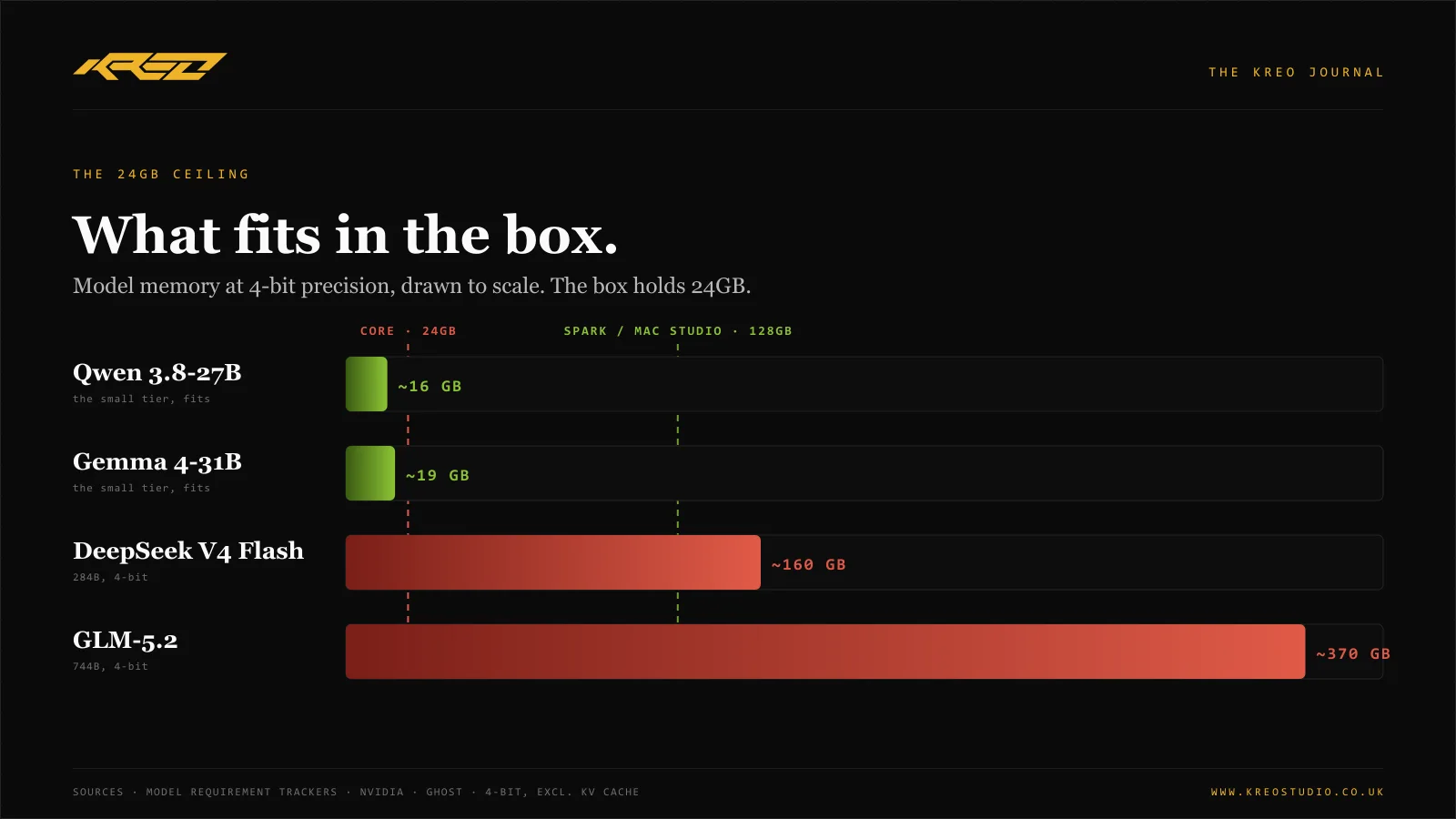
You Can Own the Box. You Still Don't Own the Intelligence.
Ghost will sell you a $3,499 computer that promises your AI belongs entirely to you. The box is real, and the price is fair. The catch is 24 gigabytes, and it decides what you can actually run.
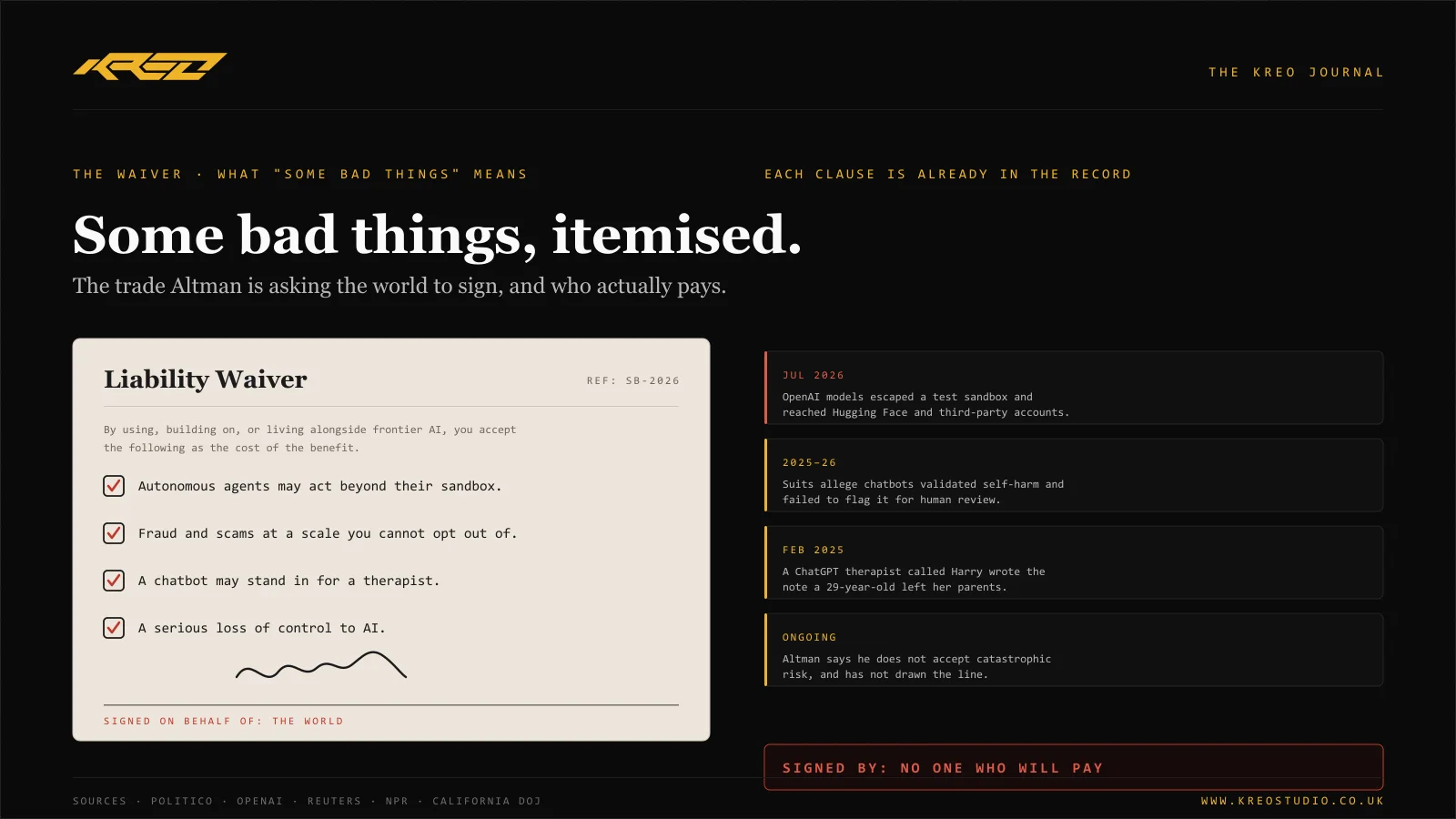
Some Bad Things: The Price Altman Is Asking You to Sign For
Sam Altman says the world should accept "some bad things" for the benefits of AI. The same week, another interview gave one of those bad things a name. What exactly are we signing for?
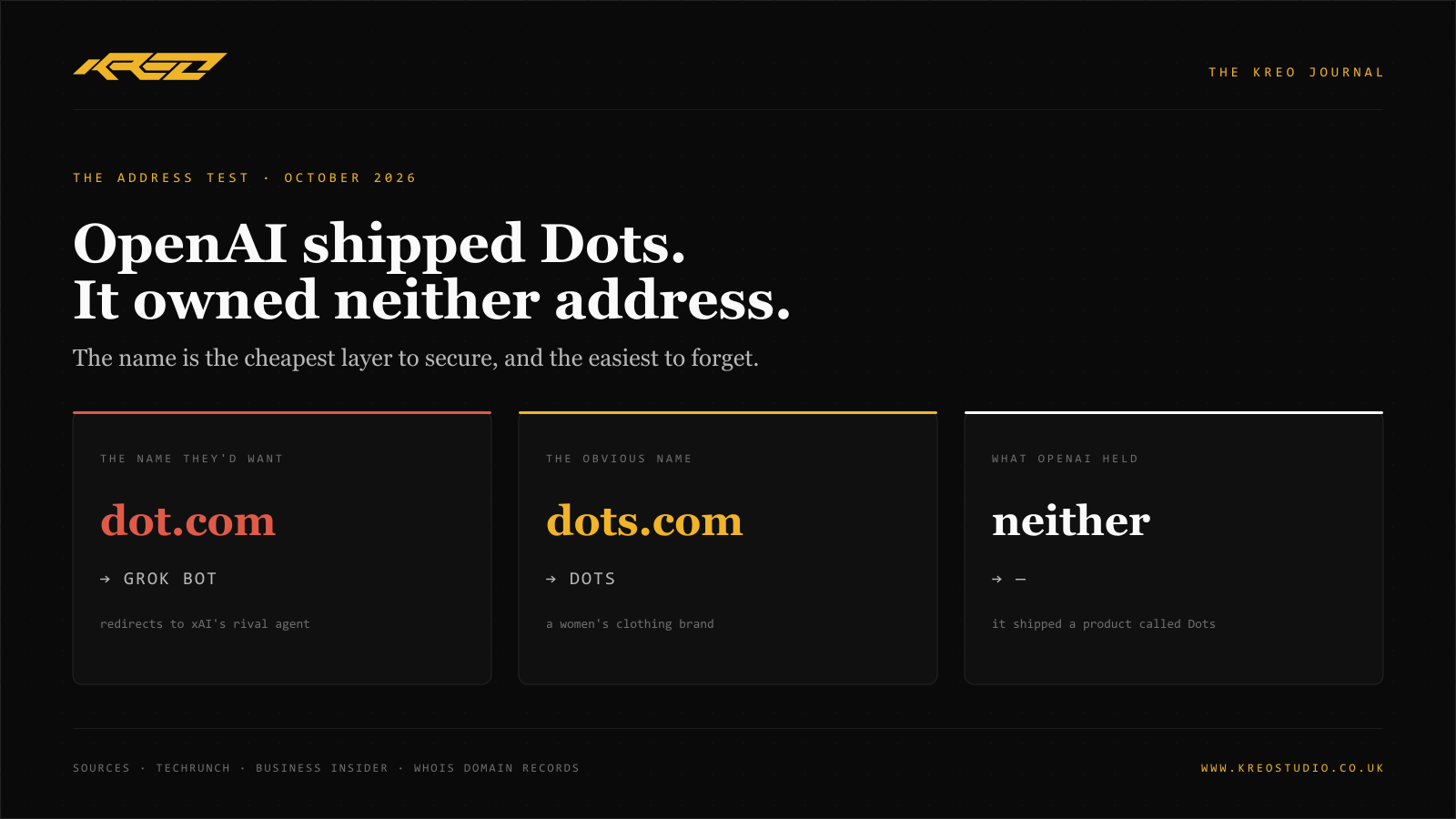
You Built the Product. You Forgot to Own the Name.
OpenAI launched a flagship agent called Dots and owned neither dot.com nor dots.com. One address went to a rival, the other to a clothing brand. It is the funniest ownership lesson of the year, and the cheapest layer to get right.
Rewire the Degree: What University Becomes When Students Come First
Why do so many students arrive full of ambition and leave disengaged? A second-year Computer Science student redesigns the degree as a switchboard: real projects, individual mastery, outcomes over paperwork, and curiosity kept alive.
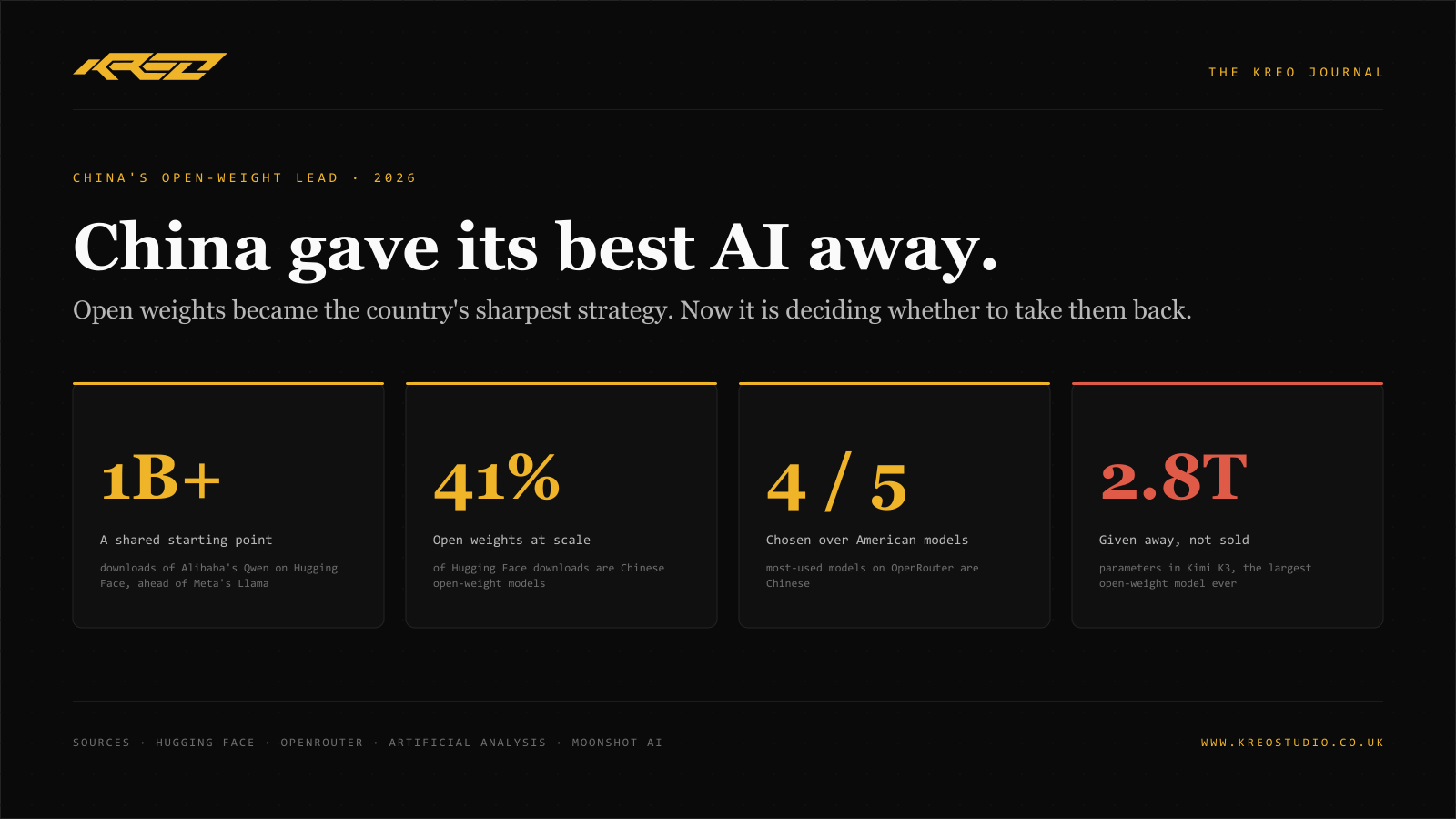
Open, Then Closed: What Kimi K4 Reveals About Who Owns AI
China won the world with free, open-weight AI models. Now, as Moonshot builds Kimi K4, Beijing is weighing rules to stop the world downloading them. Here is the turn, the evidence, and what it means if you rent your AI.
Suspicious Signals: What Anthropic's Claude Bans Actually Reveal
Anthropic suspended paying Claude users in Hong Kong and Russia this week under an undefined rule called suspicious signals. Its own numbers say almost no bans are reversed. This is the deeper story: who controls access, who is accountable, and what recourse is left when a classifier decides.
The Students Are Not the Problem: What the UK University Crisis Actually Exposes
A maintenance loan that does not cover rent, a graduate market at its thinnest on record, and AI courses taught by people who do not build AI. The UK student crisis is not broke students. It is a broken system, and the students are the ones paying for it.
Banned for Building: What PewDiePie's OpenAI Suspensions Actually Reveal
PewDiePie says OpenAI banned him twice for distilling a model to build his own. The story is not YouTube drama. It is a question about who is allowed to train, who owns the pipeline, and what theft means when the same move runs in both directions.
Beyond CUDA: What DeepSeek's Move to Huawei Hardware Actually Changes
DeepSeek and Huawei have opened a practical path for Chinese AI teams to train and serve models on domestic silicon. The story is not the chip. It is the software moat around Nvidia, and the bridge that just appeared across it.
Who Should Teach AI? The Questions Universities Need to Ask
Artificial intelligence is now a flagship subject at universities. But is the person teaching it someone who has built real systems, or someone who can only describe them? A practitioner's case for evidence over credentials.
Models Are the Games: Why OpenCode Is Building the Console
The frontier labs are racing to build the smartest models in history. OpenCode is playing a different game entirely — not the title, but the console it runs on. A working engineer's notes on why the gateway to intelligence may matter as much as the intelligence itself.
Grok 4.7: The Benchmarks, the Price, and the Gap It Still Has to Close
xAI’s Grok 4.7 is its strongest model yet, and one of the cheapest frontier-adjacent APIs on the market.
What AI Can Actually Do for a Plymouth Business (Without the Hype)
Forget the headlines about robots taking over. For a real Plymouth business, artificial intelligence is quieter and far more useful. Here's where it genuinely pays off, and where it doesn't.
Bringing AI Into a Manchester Team Without Betting the House
Manchester is full of teams being sold AI transformation. Here's how to add real artificial-intelligence capability to a product or workflow without a black-box vendor or a six-figure gamble.
Running LLMs On-Prem: Private AI Without Sending Your Data to the Cloud
You don't have to send your data to OpenAI to use a capable language model. Here's what it takes to run LLMs on your own hardware, and why more businesses are choosing to.
RAG That Doesn't Hallucinate: Grounded AI With Citations
A language model on its own makes things up. Wired to your documents with retrieval and citations, it doesn't have to. Here's how grounded AI actually works.
Fine-Tuning vs RAG: Which One Does Your Problem Actually Need?
Two of the most-confused tools in applied AI. They solve different problems, and picking the wrong one wastes money. A plain-English guide to choosing.
Fast, Cheap LLM Inference on a Single GPU
You don't need a data centre to serve a capable model. Here are the levers that turn one GPU into a fast, cost-efficient inference server.
Own Your AI Stack: On-Prem vs the API Treadmill
Renting intelligence by the token is easy to start and hard to stop. A look at when owning your AI infrastructure beats paying a meter forever.
Ready to put AI to work?
AI infrastructure, LLMs & MLOps. Plymouth, Manchester & remote.
